
2026-06-30
6 min read
By Zuve Studio Team
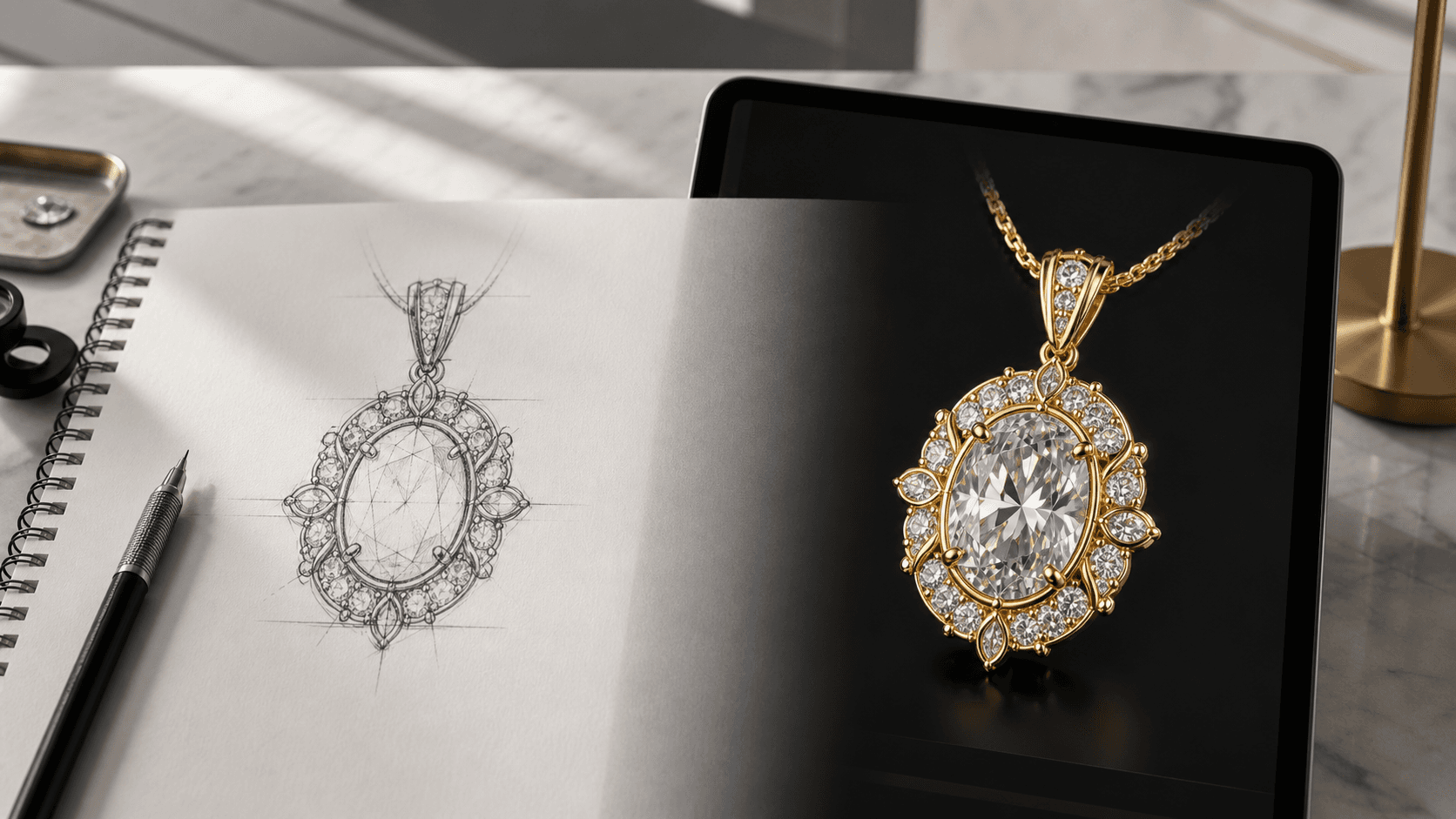
In many jewellery workflows, the first bottleneck is not CAD. It is translation. A sketch lives in the designer’s head and on paper, but not yet in a form a client or buyer can react to confidently.
Sketches are powerful for ideation, but weak for persuasion. Clients often struggle to interpret proportion, finish, or material logic from a rough concept alone.
Sketch-to-render AI shortens the distance between design intent and shared understanding. It helps the original idea become visible earlier, which means the next round of feedback can be more specific.
That is the reason we created a separate Sketch to Jewelry Render AI page instead of hiding this use case inside a generic generator message.
The usual framing is that AI makes rendering faster. That is true, but incomplete. The deeper value is that it improves communication earlier in the workflow.
If you want the broader product-level framing behind that workflow, the AI Jewelry Generator page explains how sketch-to-render fits inside a larger jewellery design system.
The Zuve Studio team consists of designers, engineers, and AI researchers passionate about revolutionizing the jewellery design industry through innovative technology.