
Choose the AI tool that actually fits a jewellery workflow.
A lot of AI jewelry design tools can make attractive images. Far fewer help designers move from concept to presentation, variation, and approval. This page is built for searchers comparing the best AI for jewelry design, with Zuve positioned around real workflow value rather than generic generation alone.
Useful for teams comparing Zuve against generic image generators.
Frames the decision around workflow, not only image aesthetics.
Supports high-intent search traffic looking for the best AI design tool.
Builds topical authority around jewellery-specific software evaluation.
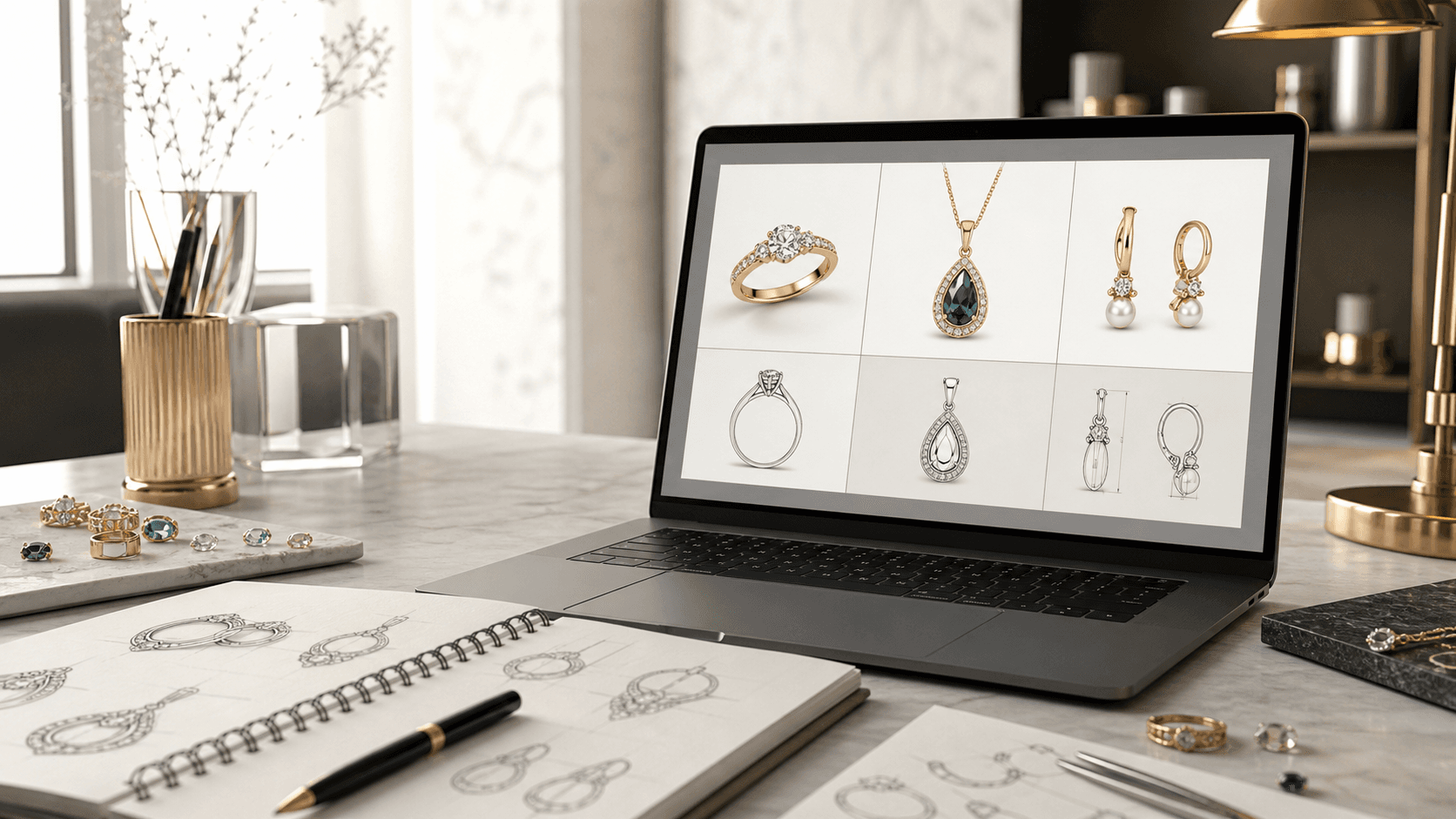
What comparison searchers are really asking
They are not just asking which tool creates a pretty image. They are asking which tool helps them design jewellery faster, communicate clearly, and iterate without friction.
What a strong comparison should show
A comparison page works best when it demonstrates the actual decision context: multiple design types, multiple stages, and a professional environment instead of vague AI marketing claims.

How to compare jewelry AI tools without wasting time
Check input flexibility
The first filter is whether the tool works from a sketch, a prompt, a reference, or only one narrow input mode.
Check design-system depth
The second filter is whether it can support matching collections, motif consistency, and client-facing jewellery communication.
Check workflow fit
The best AI for jewelry design is the tool that reduces approval and iteration friction, not just the one with the flashiest sample output.
Where Zuve is meant to win
This page intentionally positions Zuve against broad comparison queries by emphasizing jewellery-specific workflow depth. In SEO terms, that gives the page a real point of view instead of reading like a generic affiliate list.
Jewellery-Specific Output
Positioned around jewellery design workflows instead of broad creative image generation.
Collection Logic
Supports collection thinking, not only one-off image prompts.
Prompt Control
Useful when designers want to steer stones, forms, and motifs intentionally.
Brand Consistency
Designed to keep outputs closer to a house style across multiple pieces.
Related pages in this SEO cluster
Comparison traffic usually branches into two next steps: workflow evaluation and execution proof. These linked pages support both paths and help the topic cluster reinforce itself internally.
Convert AI Jewelry Design to Real Jewelry
A workflow page for moving concepts toward manufacturable outcomes.
Open page
Comparison pages need a thesis
This one is simple: the best AI for jewelry design is the one that helps a jeweller do actual design work, not just generate isolated visuals.
Quick comparison: what different tool types are good at
| Tool | Best for | Strength | Limitation |
|---|---|---|---|
| Zuve Studio | Jewellery teams and design workflows | Sketch-to-render, collection consistency, presentation and approval speed | Less relevant if someone only wants generic art experimentation |
| Midjourney / general image AI | Fast inspiration and visual exploration | Strong aesthetic variation and mood generation | Weak fit for jewellery-specific workflow and production communication |
| DALL-E / broad creative AI | Quick prompt-based concepting | Accessible way to test broad visual directions | Not built around jewellery collections, brand systems, or approval flow |
| Open-ended design tools | Experiment-heavy creative exploration | Useful when the goal is breadth of options | Easy to end up with pretty outputs that do not fit a real jewellery process |
FAQ
What should I look for in the best AI for jewelry design?
Look for sketch support, realistic render quality, fast variation, collection-building ability, and a workflow that helps with approvals rather than just single-image generation.
Is Zuve positioned as a generic AI image tool?
No. The value proposition is jewellery-specific software and workflow fit, which is a much stronger angle for professional search intent.
Why create a dedicated comparison page instead of only blog posts?
Because comparison queries are commercial-intent searches. A dedicated landing page can align much more directly with that intent than a broad thought-leadership article.